Full flowsheet minerals‑processing supplier FLS has completed a significant upgrade to its Delmas, Mpumalanga, polyurethane plant, positioning it as a key global hub for the production of its advanced NexGen wear‑resistant material. This expansion is part of a wider modernisation programme designed to strengthen supply chains, boost manufacturing efficiency and enhance sustainability across FLS’s global footprint.
Brad Shepherd, Director of Screen and Feeder Consumables, explains that the Delmas investment aligns with FLS’s strategy to standardise and optimise production processes: “This is a milestone for us. We are integrating cutting‑edge technology and modern manufacturing methodologies across all our polyurethane plants, and Delmas is leading the way. The upgrade enables us to respond more quickly and reliably to customer needs across Africa, the Middle East and Europe.”
At the heart of the expansion is purpose‑built infrastructure for NexGen screen media—a polyurethane formula that in on‑site trials has shown up to three times the wear life of conventional rubber or PU panels. “Rubber has been the go‑to for high‑impact, high‑abrasion situations,” Shepherd notes. “Through extensive research and development, we’ve designed polymers that surpass rubber’s performance by a factor of three. That translates into major improvements for customers in how they think about and interact with screen media.” NexGen’s high tensile strength, superior abrasion loss index and exceptional impact resistance also allow for larger open areas without compromising maintainability.
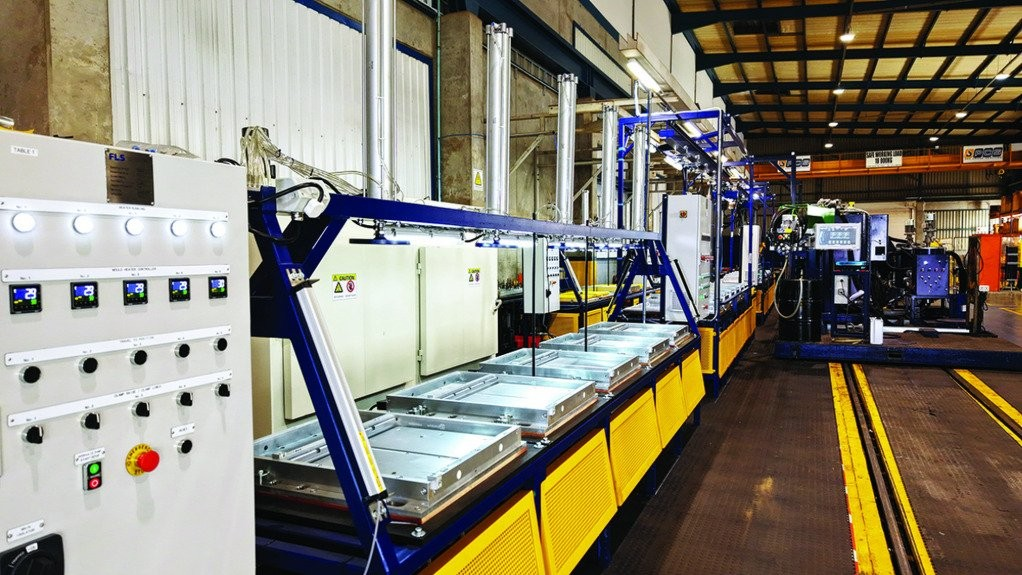
Warren Walker, Head of Global Polyurethane Manufacturing, adds that Delmas is the first of FLS’s five polyurethane plants to complete this transition. “We’ve installed the latest‑generation machines, precision tooling and dedicated preheating ovens for inserts, allowing us to significantly increase output while maintaining consistent quality.” The revamped facility now includes two trommel stations and three flat‑bed stations, each tailored for NexGen production, as well as a programmable auto‑calibrating press for on‑demand hardness adjustments.
To meet the needs of large‑volume components—such as flotation spare parts and vertical mill liners—a high‑capacity pour line capable of 42 kg/min is now in operation. This builds on a 2019 upgrade that introduced a six‑axis machining centre, robotic welding for panel inserts and a CNC‑controlled spiral‑welding line for wedge wire products.
Energy efficiency was a critical focus in the redesign. Each casting table features individual temperature control to avoid unnecessary heating, supporting FLS’s carbon‑reduction goals. In 2024, a 300 kW solar array was installed at Delmas, with plans to add another 500 kW in 2026 alongside a battery energy storage system.
Delmas also offers full vertical integration—from raw‑material processing and in‑house machining to final assembly and factory acceptance testing—enabling tighter quality control and faster lead times. “We don’t just supply products,” says Shepherd. “Our on‑the‑ground specialists work with customers to assess site conditions and select the optimal screening media for each application.” By pairing NexGen’s mechanical advantages with the correct aperture design, older plants can achieve longer service life and better performance even when processing materials beyond their original specifications.
Walker underscores the local benefits of the upgrade: “Our commitment to local manufacturing is evident in the scale of our investment and the jobs we’ve created. We’ve expanded our workforce, prioritised local recruitment and significantly grown our apprenticeship programme.” At Delmas, long‑standing team members have received extensive training on the new equipment, ensuring that increased throughput capacity and high‑quality output go hand‑in‑hand with strong local employment opportunities.
Source: Mining Weekly