In a decisive move to ease regulatory pressure on key manufacturing industries, the Government of India has withdrawn 14 BIS (Bureau of Indian Standards) Quality Control Orders (QCOs), effective immediately from the date of the Gazette notification.
The rescinded QCOs covered a range of critical polymer and fibre intermediates, materials widely used across chemical, plastics, and textile value chains. These include Terephthalic Acid (PTA), Ethylene Glycol (EG), Polyester Yarns and Fibres, Polypropylene (PP), Polyethylene (PE), Polyvinyl Chloride (PVC), Acrylonitrile Butadiene Styrene (ABS), Polycarbonate (PC), Ethylene Vinyl Acetate (EVA) Copolymers, and Polyurethanes (PU).
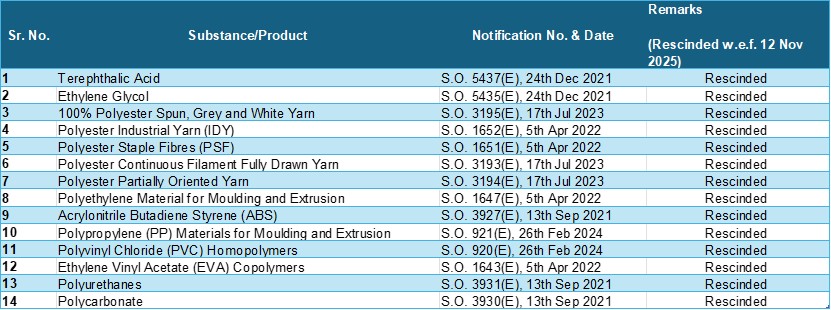
According to the Ministry of Chemicals and Fertilizers, the decision was taken to ensure smoother availability of raw materials, reduce import bottlenecks, and lower input costs for downstream industries, particularly MSMEs engaged in packaging, textiles, and moulded plastic goods.
By lifting the mandatory BIS certification requirements, the government has simplified compliance, eliminated overlapping testing procedures, and accelerated approvals for both manufacturers and importers. Industry officials have welcomed the move, noting that it is expected to enhance operational efficiency, improve production planning, and strengthen global competitiveness, particularly for companies dependent on imported feedstock.
“The decision is a significant boost for sectors that have long demanded flexibility in sourcing raw materials on par with global standards, without the added cost and time associated with mandatory domestic certification,” said an industry representative.
The rescission of these QCOs is expected to streamline supply chains, lower regulatory burdens, and foster growth in India’s chemical, plastics, and textile industries, supporting the government’s broader objective of making Indian manufacturing more competitive on the global stage.
Source: Ministry of Chemicals & Fertilizers, Government of India