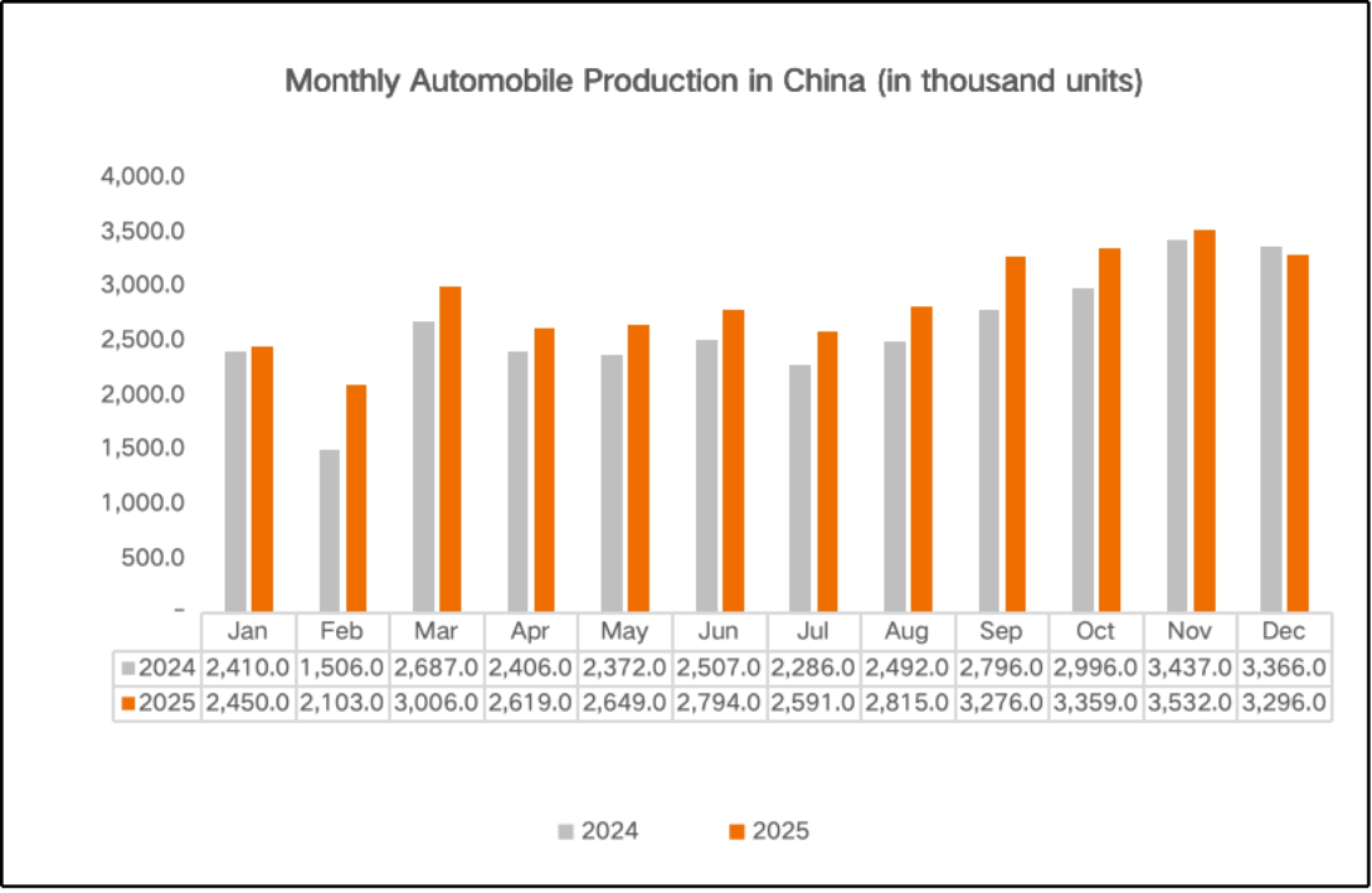
In 2025, China's automotive industry delivered an impressive performance. According to data from the China Association of Automobile Manufacturers (CAAM), annual production and sales reached 34.531 million and 34.40 million units respectively, representing year-on-year (YoY) increases of 10.4% and 9.4%. This marks the 17th consecutive year that China has ranked first globally. This achievement not only underscores the strong resilience of the Chinese market but also brings the "14th Five-Year Plan" to a successful conclusion. Notably, the rapid development of New Energy Vehicles (NEVs) was the biggest highlight, with production and sales both exceeding 16 million units, accounting for nearly 50% of total vehicle sales. Against this market backdrop, polyurethane (PU), as a versatile material, is playing a critical role in automotive seating, interiors, and acoustic insulation, driving the industry toward more comfortable and environmentally friendly transformations.
Robust Overall Market Growth: Passenger and Commercial Vehicles Advancing Together
Reflecting on the full year of 2025, the Chinese automotive industry demonstrated immense vitality. CAAM data shows that passenger vehicle production and sales reached 30.27 million and 30.103 million units, up 10.2% and 9.2% YoY. Commercial vehicle production and sales were 4.261 million and 4.296 million units, increasing by 12% and 10.9% YoY. This growth was fueled by policy support, such as the expansion of "Two New" policies (equipment upgrades and consumer goods trade-ins), alongside intensive new product launches by enterprises, which stimulated terminal demand.
However, market performance in December showed slight volatility. Monthly production and sales were 3.296 million and 3.272 million units, down 2.1% and 6.2% YoY, respectively. Within this, passenger vehicle sales dropped 8.7% YoY, while commercial vehicles bucked the trend with a 15.3% increase. Chen Shihua, Deputy Secretary-General of CAAM, noted that while seasonal factors influenced single-month data, annual production and sales have remained above the 30-million-unit mark for three consecutive years, reflecting the industry's stability and potential. Chinese-brand passenger vehicles accounted for 69.5% of sales, up 4.3 percentage points from the previous year, further consolidating the competitiveness of domestic brands.
NEVs Take the Lead: Market Share Hits Record Highs
New Energy Vehicles (NEVs) were undoubtedly the "stars" of the Chinese automotive market in 2025. Annual production and sales reached 16.626 million and 16.49 million units, representing a massive YoY surge of 29% and 28.2%, respectively. NEVs accounted for 47.9% of total new car sales. In December alone, NEV production and sales reached 1.718 million and 1.71 million units, up 12.3% and 7.2% YoY, with market penetration hitting a high of 52.3%. These figures not only secure China’s global leadership for the 11th consecutive year but also signal that NEVs have become the dominant force in the domestic market.
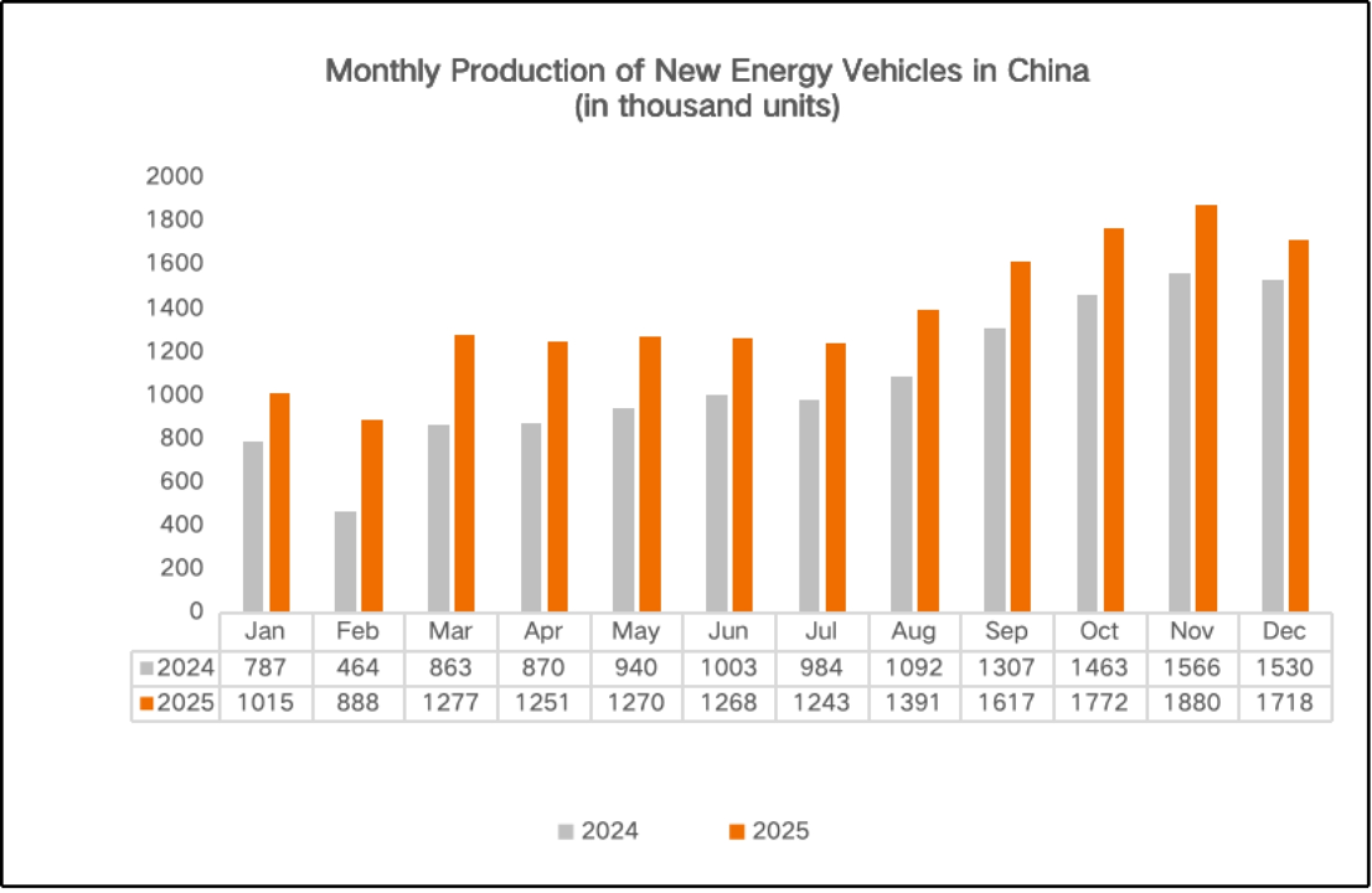
According to Xinhua News Agency, this explosive growth stems from technological innovation and policy dividends. The rapid advancement of Intelligent Connected Vehicle (ICV) technology, combined with the deep transformation of Chinese-brand automakers, has driven fast iteration in this field. Chen Shihua emphasized that the rise of NEVs is accelerating the transformation and upgrading of China's automotive industry, injecting new momentum into high-quality development.
Applications of Polyurethane Materials: Enhancing Comfort and Environmental Performance
Against the backdrop of high market growth, material innovation has become a key pillar supporting industry development. Polyurethane (PU), as a high-performance foam material, is increasingly used in automobiles—particularly in the NEV sector. It provides excellent comfort and durability while supporting lightweight design and sustainability goals.
Automotive Seating: PU foam is a core material in seating. By precisely controlling molecular structures and hydroxyl values, manufacturers produce high-resilience (HR) foams that provide soft yet firm support for seats and backrests, effectively reducing fatigue during long drives. Companies like Shidian Chemical have developed PU polyethers that further enhance seat comfort and durability. PU is also used in headrests and armrests to ensure a premium passenger experience.
Interior Trim: PU is indispensable for interiors, widely used in headliners, carpets, dashboards, door panels, and luggage racks. As an adhesive, it enables multi-layer lamination, improving both aesthetics and functionality. PU adhesives ensure strong bonding while reducing Volatile Organic Compound (VOC) emissions to meet environmental standards. Solutions like the low-emission PU offerings from BASF further protect cabin air quality, which is a priority for modern NEV interior design.
Acoustic and Thermal Insulation: The porous structure of PU foam effectively absorbs noise and vibration, creating a quiet cabin environment. Its acoustic performance significantly outperforms traditional materials. BASF’s Cellasto®materials are specifically designed to address NVH (Noise, Vibration, and Harshness), providing both high-frequency and low-frequency insulation. Furthermore, waste PU foam can be recycled into new acoustic materials, promoting a circular economy.
NEV-Specific Applications: In NEVs, PU applications have expanded into battery packaging and body structures, assisting in lightweighting and improving energy efficiency. Covestro and other industry leaders emphasize that PU’s versatility allows for single-material solutions, including thermal insulation foams and compact designs, driving the industry toward greater efficiency. As NEV market share surpasses 50%, the demand for advanced materials like PU is expected to amplify, triggering further innovation across the supply chain.
Strong Exports and Growing Global Influence
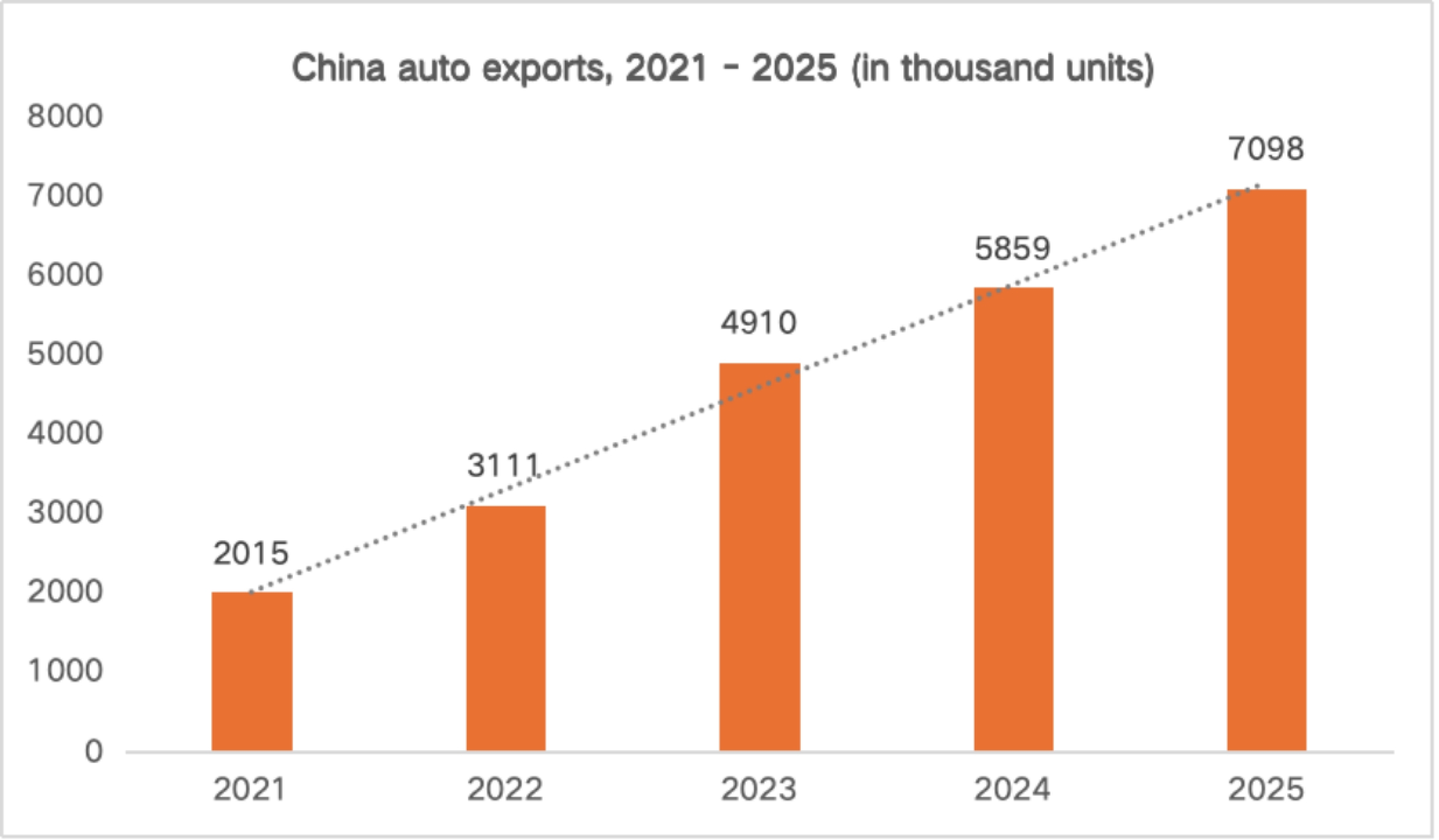
China's automotive exports also hit new records in 2025. Total vehicle exports reached 7.098 million units, up 21.1%YoY. Among these, NEV exports reached 2.615 million units, skyrocketing by 103.7%. In December, total exports were 753,000 units (up 49.2%), with NEVs accounting for 300,000 units (up 124.8%). These figures reflect the international competitiveness of China's automotive industry, particularly its leadership in the NEV sector, contributing significantly to the global green transition.
Looking Ahead: Sustainable Growth in Tandem with Materials Innovation
The performance of China’s automotive market in 2025 not only set multiple new records but also laid a solid foundation for 2026. According to forecasts by CAAM, the automotive industry will continue to advance high-quality development and maintain stable operations. The leading role of new energy vehicles is expected to further strengthen, while innovative applications of materials such as polyurethane will enhance comfort, environmental performance, and intelligent features, thereby supporting the industry’s sustainable development. With the gradual release of market demand and ongoing technological progress, China’s automotive industry is set to continue shaping global trends.